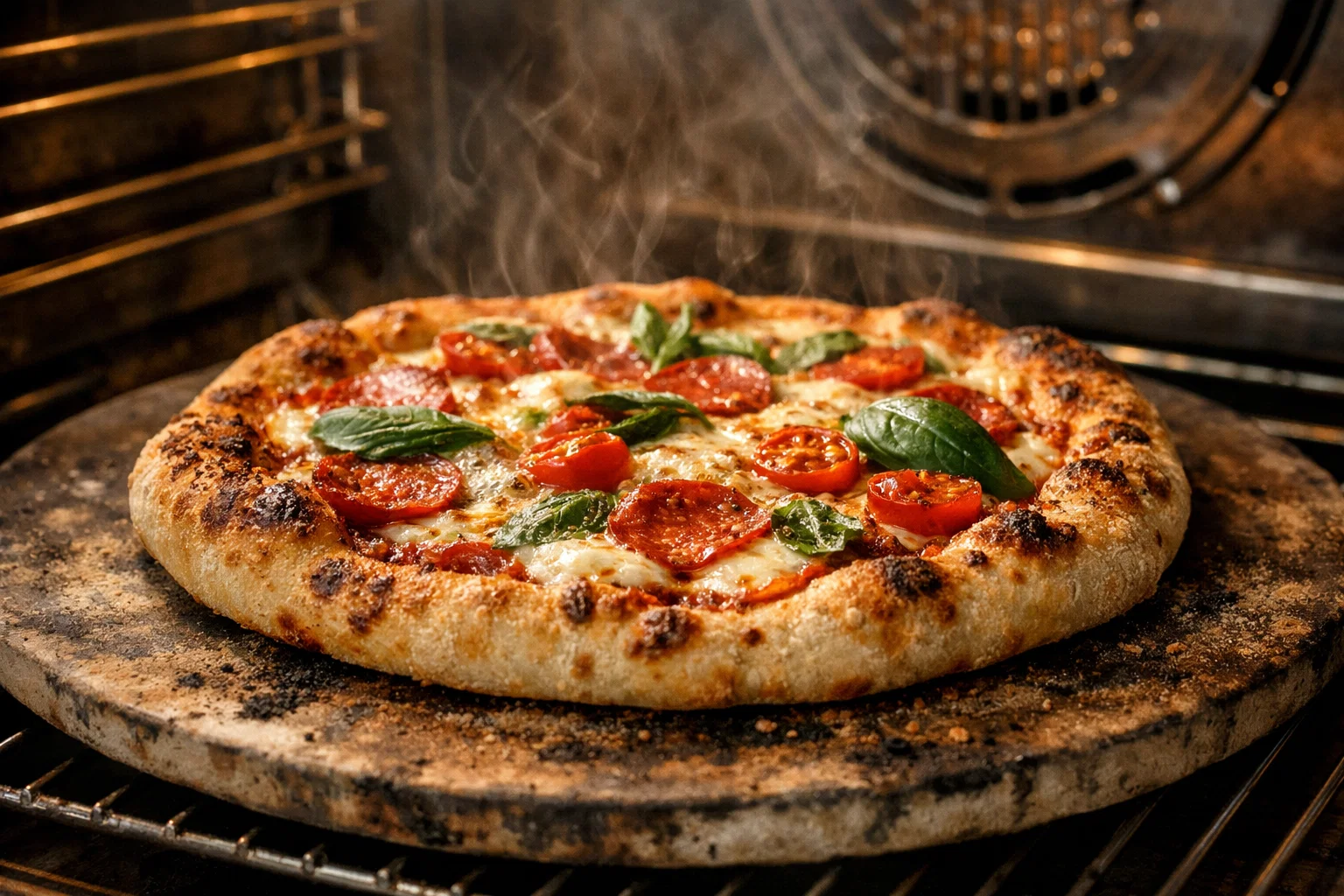
A pizza stone is the must-have item for a pizza lover who prefers homemade pizza. It aids in producing an ideal crisp crust, and the toppings are evenly cooked by imitating a brick oven. A pizza stone takes your baking to the next level, whether you are baking in an oven or a grill. This guide provides an explanation of a pizza stone, its operation, materials, and temperatures, and tips on how you can use this tool in the oven and on a grill, producing restaurant-quality results.
Understanding Pizza Stones
A pizza stone is a level, warming surface created out of one of the following materials: ceramic, cordierite, cast iron, or steel. It imitates the floor of a brick oven, which ensures that the dough bakes in an even way, creating a crunchy bottom. Pizza stones can be utilized for a variety of baking other than pizza.
Read along:
How Pizza Stone Works
A pizza stone is effective in controlling heat and moisture that will produce a desirable crust and bake evenly.
- Heat retention: Absorbs and retains the oven or grill heat.
- Even cooking: Distributes heat uniformly to prevent uneven crusts.
- Moisture absorption: Removes excess water in dough to make it crisp.
- Brick oven effect: Simulates commercial pizza ovens at home.
- Brick oven effect: It is an imitation of the commercial pizza oven in the home.
Materials, Differences, and Ideal Temperatures.
Diverse materials have an influence on the heat value, the highest temperatures, and the overall baking task.
| Material | Max Temperature | Heat Retention | Notes |
| Ceramic | 450–550°F | Medium | Affordable, widely available |
| Cordierite | 700–900°F | High | Durable, crack-resistant |
| Cast Iron | 600–700°F | Very High | Excellent heat retention |
| Steel | 800–900°F | Very High | Perfect for high-heat pizza |
Using a Pizza Stone in Oven and Grill
Correct use of a pizza stone can take homemade pizza, bread, and flat bread to a better level. Ovens and grills can do a great job if you know the methods of preheating, transferring, and baking to achieve the right crunchy layer and toasted toppings to perfection.
Read along:
Oven Preparation
Preheating: Place the pizza stone in the oven, preferably on the middle or bottom rack. The oven should be preheated for at least 30 minutes to enable the stone to absorb all the heat. This makes the dough evenly cook and contributes to the golden and crispy texture on the surface of the thing, which is associated with the brick oven at home.
Motivating Pizza to the Stone.
In order to transfer a pizza, a pizza peel or parchment paper is needed. The peel is dusted with flour/cornmeal to avoid sticking and also to help the pizza slide onto the hot stone easily. The method preserves the dough and prevents the transfers from being messy and the crust shape required.
Baking Tips for the Oven
Cook the pizza until the crust turns golden-brown, and the toppings have been cooked. The opening of the oven door should be done as little as possible and should lead to a lossof heat and uneven baking. To ensure optimization, the bottom crust of the pizza should be monitored to ensure that the crust is crispy as the top cooks evenly.
Using a Pizza Stone on a Grill
Preheat the grill by placing the pizza stone in the grill and keeping it at medium-high heat. Indirect heat should be used to avoid scorching. Move the pizza inside the stone and seal the lid to seal the heat in, and it is baked evenly, giving the pizza a smoky brick-oven flavor.
Conclusion
A pizza stone is a necessary accessory of any home baker who wants to arrive at the results of a professional level. It gives a crisp crust to the pizza and bakes it to perfection with even heat distribution and by absorbing moisture. Regardless of whether it is being cooked in a traditional oven or on a grill, preheating and technique are important. When used properly, a pizza stone turns an amateur pizza and bread into restaurant-quality dishes, improving the taste and the texture without adding additional work.
FAQs
Is it possible to place a pizza stone on a gas or charcoal grill?
Yes, pizza stones apply to grills. Indirect heat should be used, and initially preheat the stone to avoid burning.
Do I need to oil a pizza stone?
No, avoid oiling it. The presence of moisture that is naturally absorbed in the stone contributes to the building of a sharp crust.
How do I clean a pizza stone?
Clean the food that is stuck to it with a damp cloth. Do not use soap or water, as this may ruin the stone.
Is it possible to use a pizza stone with bread or cookies?
Yes, the use of pizza stones can be highly noted with artisan bread, flat breads, and cookies because the heat is evenly distributed.
What is the correct temperature for baking the pizza on a stone?
Depending on the material, the ideal temperature is 450-550 deg F ceramic, 900 deg F steel, and cordierite.